My Not-Quite Cultural Olympiad: South Africa

[Details of what my Not-Quite Cultural Olympiad is all about are here.]

So far in my Not-Quite Cultural Olympiad I’ve covered two continents and two forms of art, so it seems only appropriate to move on to a third of each, with the country of South Africa and a piece of literature. For those who’ve been reading this blog for a while, it’s probably not difficult to guess where I’m going with this: ‘Zoo City’, by Lauren Beukes.

I really can’t sum up Zoo City better than the official blurb, so here it is:

Zinzi has a Sloth on her back, a dirty 419 scam habit and a talent for finding lost things. But when a little old lady turns up dead and the cops confiscate her last paycheck, she’s forced to take on her least favourite kind of job – missing persons.

Being hired by reclusive music producer Odi Huron to find a teenybop pop star should be her ticket out of Zoo City, the festering slum where the criminal underclass and their animal companions live in the shadow of hell’s undertow.

Instead, it catapults Zinzi deeper into the maw of a city twisted by crime and magic, where she’ll be forced to confront the dark secrets of former lives – including her own.

That’s a pretty good description of a book that’s actually quite difficult to describe. It’s perhaps halfway between an urban fantasy and a crime novel with a bit of cyberpunk thrown in, but far different to what I’ve read in any of those genres. When I read it last year – and talked about it on the blog – I noted that, “Fantastical elements aside, Johannesburg comes across as both very familiar and very alien. More importantly, Zinzi is the most real character I’ve read in a long time. This is the sort of thing I want when I read urban fantasy, with its darkness, modernity, edginess and humour. I loved it.”

Maybe this is a bit of a cheat: I’m using the official blurb to tell you about the book and my own review from last year to detail how much I like it. What more can I honestly say though, to persuade you just how good this book is? That it won the Arthur C Clarke award in 2011? That Beukes accepted her award wearing a sloth? That is has more good reviews than you can shake a stick at?

I tend to feel that western urban fantasy just isn’t as fantastical, or even as urban, as I’d like. The cities don’t feel real, the fantasy is bland and forgettable, and there are only so many vampire/werewolf boyfriends I can take. Zoo City was, for me, the perfect antidote to that: properly gritty, and funny, with a brilliant main character and a city (Johannesburg) that feels like it exists beyond the confines of the novel. I can’t really give it any more endorsement, other than to say, go read it!

My Not-Quite Cultural Olympiad: The Netherlands

[As last time, if you’ve arrived not quite knowing what I’m doing with my Not-Quite Cultural Olympiad, go here.]

After my last post, it’s time to come a bit closer to home, with the Netherlands. As of writing this, they’re at 14th position in the Olympics medal rankings, which is nothing to be sneezed at. These posts aren’t about sporting events though, so what am I going to pick instead?

As may be the case with a few of these posts, it’s going to be a band. With the Netherlands though, unlike some countries, I have no qualms about choosing one band in particular: Epica. When it comes to European metal bands overall, there are few I enjoy quite as much as Epica, after all.

So, the basics: Epica fall fairly firmly into the category of ‘symphonic metal’, meaning they incorporate not only guitar solos and thundering drums, but keyboards, orchestral arrangements and the divine vocals of Simone Simons. Female-vocalled symphonic metal isn’t a rarity, by any means, but ever since they first appeared on the scene in 2002, Epica have consistently been one of the strongest and most accomplished bands in the genre, and there’s no sign of that changing any time soon.

Take their newest album, ‘Requiem for the Indifferent’, which showcases everything from delicate ballads (‘Delirium’), to heavy guitar parts and powerful choirs (as in the very next song, ‘Internal Warfare’). Over it all soar Simons’ vocals, which have continued to grow in strength and versatility over the years, and lend a compelling edge to the frequently complex song structures.

Lyrically, Epica are interesting too. They’ve always seemed to me to take a more political and socially-aware slant in their work than many similar bands, covering topics as diverse as 9/11 and Deepwater Horizon. As they point out on their website about their latest album:

The album title refers to the end of an era. Mankind can no longer stick their head in the sand for the things that are happening around us: tensions between different religions and cultures, wars, natural disasters, a huge financial crisis. As we are all connected; the universe, the earth, nature, animals and human beings, this period in time will be the prelude to the end for those who still don’t want to, or simply won’t see it. A requiem for the indifferent but also a possibility for a new beginning with great new chances.

That certainly beats yet another power metal song about how great power metal is (they exist, believe me).

So, there’s the first musical offering in my Not-Quite Cultural Olympiad. Epica: ambitious, varied and never boring. (Remind you of a particular sporting event, by any chance…?!)

My Not-Quite Cultural Olympiad: China

[For a quick introduction to this series, and what I’m trying to do with it, go back here.]

I’m kicking off my Not-Quite Cultural Olympiad with China, as they’re really dominating in the actual-Olympics medal rankings at the moment. I’m also, for my first post, cheating a little bit: I said I was going to pick a single piece of art/culture, but this time round I want to actually pick three.

Why three, and what are they? They’re actually three films, namely ‘Crouching Tiger, Hidden Dragon’, ‘Hero’ and ‘House of Flying Daggers‘. It’s a tad stereotypical to choose martial arts films for China (ok, maybe a lot stereotypical), but I have my reasons. You see, these three films, which came out in relatively quick succession, are where I can trace my interest in any culture outside my own to.

That’s a big claim to make, is it not? All three films were though, for me, a window into a world so very unlike my own. I had enjoyed action films before, but these were something else, combining stunning visual flair with strong, genuinely emotional stories. I can’t count the number of times I’ve watched these three films (‘Hero’ especially) and they continue to impress me every time, even ten years since their release.

I won’t go into a vast amount of detail about the films themselves – there’s plenty out there online, or better yet just watch them for yourself. Not usually a fan of martial arts films – or even just action films? There’s still a lot to enjoy in all three, right down to the less-than-happy endings (which I think are a given in this particular end of the genre).

Sadly, similar films in the years since have never quite matched up to the joy of these three ‘originals’ (‘The Banquet’, for example, was stunning but felt a bit hollow, whilst ‘Red Cliff’ was impressive but not quite as stylish), but that does nothing to diminish the power of ‘Crouching Tiger’, ‘Hero’ or ‘House of Flying Daggers’.

It’s fair to say that these three films changed the way I saw the world. They’re responsible not just for my specific interest in martial arts films and art in translation, but for my desire to look beyond the confines of my own culture, to see what else the world had to offer. And, as I hope to keep showing in my Not-Quite Cultural Olympiad, there was a whole lot out there for me to find.

My Not-Quite Cultural Olympiad: Introduction

We’re well into Olympic season here in the UK – there’s just about nothing else on the BBC at the moment, or in the news. I have to admit, I’m enjoying the sport more than I anticipated I would – the sheer variety is lot more interesting than your average sporting event, and it’s great to see coverage of sports that don’t usually get a lot of attention, like archery and hockey.

Alongside the sport though, we’ve also had what’s been called a Cultural Olympiad. Another admission here: I personally feel that website is a bit woolly on exactly what the Cultural Olympiad is, and I haven’t seen a great deal of evidence of the events it mentions. Still, rather than be deterred, I thought I’d do my small bit to add to the overall celebration of culture – but rather than focus on the UK, I want to spread my net wider. For the next two or three weeks, I’m going to be choosing countries from around the world (who are competing in the Olympics), to share a single aspect of their art and culture that I love.

This is really picking single blades of grass out of a meadow, I realise – I can only cover a handful of countries, and I only have the space to talk about one thing (be it a film, band, author etc. etc.) for each. However, I want to only share art that I’m really passionate about and really love, hence narrowing the selection down so much. Rather than throwing a scattershot of bits and pieces out there, I want to home in on my absolute favourites and share them with my readers. Some will be new discoveries, and others will be things I’ve loved for years. Who knows, perhaps a little bit of my passion will rub off on someone else!

As of writing this, the Olympic medals rankings are really being dominated by China, with nine golds, so it seems only fair to start there in my next post. And after that… Well, I’d like to try to cover as many continents as possible, so it’s going to be something of a whistlestop tour!


This Writing Life: We Work Harder

I want to start off this post by sharing a music video. Go on, have a look (the video is a little strange, I admit, but the song is great).

[youtube http://www.youtube.com/watch?v=VH5vgng9LAg]

For anyone who didn’t want to watch, here are the lyrics that always grab my attention:

As these are hard times
We’ll work harder, harder
Through these hard times
I’ll work harder, harder

This particular chorus always grabs me, every time I hear it. Why? Because it feels, every time, like something of a battle cry, a call to arms for those of us who are struggling on through life, and particularly those of us who have chosen to try to make their way in creative industries.

After all, this is not a good time to be creative, we keep being told. Most of the western world is in a recession – even a depression. There are not enough jobs to go round, not enough homes to go round, not enough money to go round. And, if you’re a writer, you don’t need to read publishing blogs for long to be saddled with even more bad news. The publishing industry is dying! No wait, it’s already dead! There’s no money in self-publishing! Agents aren’t looking for new clients! Publishers don’t want new authors! And even if you do find an agent, even if you get published, there’s no money anyway, so you’d better be prepared to work for peanuts.

Ok, a lot of this is exaggeration and scare-mongering, though there’s of course a grain of truth in each of these statements. Even if you’re being positive, it’s clear that plenty of publishers are becoming more risk averse, plenty of agents are overburdened with too many submissions, and making any money out of writing at all – be it traditionally or self-published – is becoming increasingly difficult.

Here though, is where we come back to that song. ‘These are hard times’ it declares – they certainly are. But it’s not enough to just acknowledge that fact and let it run us down. Instead, we can only do as Patrick Wolf suggests: we’ll work harder.

Call it a battle cry, or just call it good old common sense, but looking at the state of the publishing industry – of the world – and despairing is no use to anyone. We need to write more, hone our work, pursue as many avenues of publication as possible. And if things get even worse, as there’s no guarantee they won’t? Well, I know what I’ll be doing. I hope you’ll join me.

This Writing Life: Novel Editing and Character Arcs

After my break last week, it’s back to work, and for me that means back to editing a novel. Last time, I wrote about my initial read-through of the first draft, and the copious notes I was making. This time, I’m moving onto the nitty-gritty of making sure each individual element of the novel works – and how to fix the bits that don’t.

I’ve already looked at the plot arc of the novel, and ascertained that it more-or-less works (using a handy synopsis-making tool in Scrivener, which I may cover in a separate post). For this particular novel, I’ve found it more important to look carefully at my character arcs: I have five POV characters, and I want to do my best to make sure their growth throughout the novel is consistent and, hopefully, satisfying.

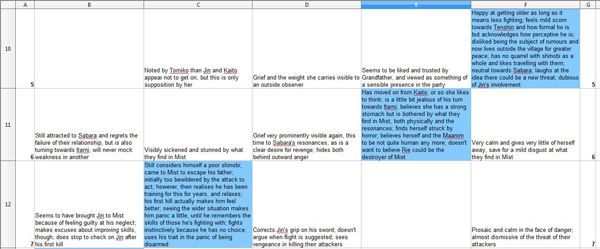
To do this, I’ve turned to spreadsheets. Not the most thrilling method in the world, perhaps, but laying out each character arc in sequence has been very useful, allowing me to see where individual arcs have perhaps turned aside, repeated themselves or even gone backwards (e.g. two characters who hate each other one chapter, make up in the next, and have mysteriously gone back to hating each other in a third, for no discernible reason).

In this example, you can see the five columns for the five characters, blue boxes denoting whose POV a chapter is, and my notes on how their character arc has progressed (which, depending on your eyesight, you may or may not be able to read!). The next stage – already nearly finished – was to work out how I wanted each finished arc to be (as opposed to how they are at the moment), and decide how each existing chapter needs to be tweaked to achieve that goal.

It’s been a complex process and one that, I have to admit, may have been more complicated than it needed to be. In developing each ‘new and improved’ character arc, I’ve come across only half a dozen places where major changes need to be made – most of the arcs will follow a very similar path in the final draft as they did in the first.

The difficulty, of course, is in knowing whether that means I got the characters right in the first draft, or whether I’m not making big enough changes in the edits. As to how to answer that… Well, I honestly don’t know at the moment. I can only hope that the overall, finished book is a success – and that’s something only readers and critiquers will be able to tell me!

Newgrange & Knowth

So, I’m back home after my short holiday in Ireland. We had a great time there, both in the countryside and in Dublin, with lovely hotels, fantastic food and probably better weather than the UK was having.

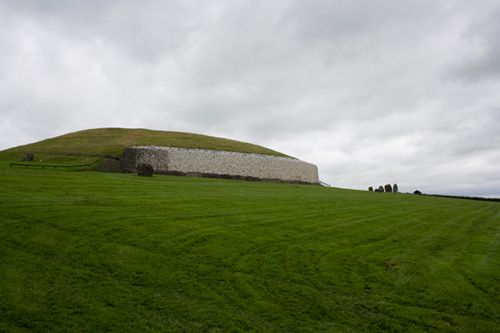
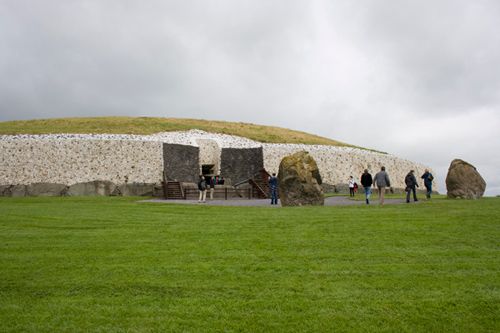
The main reason we picked the part of Ireland that we did was to see its Neolithic monuments, particularly the passage tombs at Newgrange and Knowth, beside the Boyne river. Both are fantastic sites, particularly the brief trip inside the mound at Newgrange, with its atmospheric lighting and beautiful stone carvings. Both tombs are older than Stonehenge, in a striking location, and very impressive – although I should point out that the white facade of Newgrange was reconstructed in the 1970s, and its interpretation is more than a bit divisive amongst archaeologists. Anyway, there’s more information at that link, for those who are interested (the photos are worth a look, for one thing, to make up for the dreariness of the weather in those we took!).

These two photos show Newgrange’s exterior, and demonstrate just how big it is (and there’s that white facade that may or may not have ever existed in the Neolithic – as I pointed out, and as is noted on Wikipedia, how would Neolithic technology have managed to hold so many small stones up so neatly, and at such a steep angle? At Knowth, where similar pieces of quartz were found, they’ve been instead interpreted as a pavement area in front of the entrance).

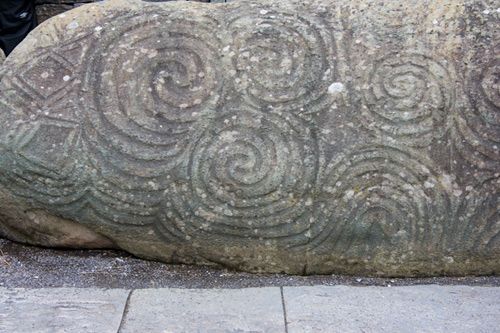
As I mentioned before, both sites are also home to some stunning rock carvings. This particular one – probably the most famous from the site – marks the entrance to the passage tomb itself at Newgrange.

As with many such Neolithic sites, both Newgrange and Knowth are fairly touristy, and it’s difficult to get a sense of what the atmosphere would have been like at them when they were constructed. Still, both are incredibly impressive and well worth a look if you’re in the vicinity.

Placeholder Time Travelling Post!

It’s time travelling time! (Cue Twilight Zone music.)

Basically, I’ve sent this post into the future (from last week), as I’m away this week, sampling the probably-not-so-sunny (it hasn’t happened yet so I don’t know either way) delights of Dublin. I’ll be back next week, with more posts and hopefully some photos (assuming I haven’t forgetten my camera, but I don’t know that yet either – oh, this time travelling is getting confusing).

So, have a good week, enjoy the sun if there is any where you are, and keep writing. (I probably haven’t been, because I’m on holiday, but I don’t know- Oh, never mind.)

This Writing Life: Always Creation, Never Destruction

There’s a lot of negativity – of destruction, to use the term I’ve put in this post’s title – in the world. Perhaps that goes without saying. On a smaller scale though, there’s also a lot of negativity in the publishing industry (and I’m not even talking about the whole ‘death of publishing’ cry that seems to whip round the internet every few months), and even just in the smaller-still world of SFF. This isn’t something that can be entirely avoided, of course, but perhaps there are things we can do to mitigate its effects.

If anything, there seems to be more negativity around at the moment than ever before. There are blogs that, although dealing with important issues – like race or gender in SFF – frequently do so in an acerbic, even vitriolic manner. Some are humourous – others seem to me to be simply destructive, adding little to important conversations about where the genre is heading. You can make all sorts of excuses, of course, such as these blogs are coming from a perfectly justifiable sense of anger, but that doesn’t mean they’re expressing that anger in the most useful or instructive way.

Then there are the perhaps more personal issues of authors imploding after bad reviews, and of scathing reviews left for all the wrong reasons (genuinely not liking a book is one thing – personally attacking the author because you don’t like the prices of their e-books is something else entirely). In the former, a brief flutter of ‘any publicity is good publicity’ can quickly turn into an author being black-listed for their unprofessional behaviour; in the latter, such reviews can be horribly upsetting for the targeted author, and quickly become nothing more than (pardon my French) shit-flinging, often using language that the reviewer would never dream of using to a person standing in front of them. There is a real person on the end of that email, or looking through their Google Alerts, though – too many people online seem to entirely forget that fact.

Then we have the separate issue (but one that I’ve been thinking about a lot recently) of grimdark fantasy, a sub-genre that seems to have dominated in recent years. I’m not saying all books should be sweetness and light – far from it, if they’re going to address important or difficult subjects – but many of these novels seem to feature violence and misogyny and general unpleasantness simply to seem more grown-up and ‘edgy’. In the end, all that grimness and darkness doesn’t mean anything, becoming nothing more than titillation.

So what’s the answer? For me, it comes back to that title – ‘always creation, never destruction’. When writing a bad review, or a difficult scene, that mantra becomes incredibly important. Does this review actually give constructive criticism, or illustrate a wider point – or am I just letting off steam? Is the darkness in this scene there for a reason and necessary to the plot – or am I just being mean to my characters because I’m having a bad day?

Negativity is, as I said before, a fact of life, and sometimes a very necessary one. However, sometimes it’s better to take a step back, look at that scathing or insulting or unpleasant thing you’re about to write, and really ask yourself whether it’s going to add something useful to the world – or if it’s just destruction for destruction’s sake.

Back-Up Your Work!

You don’t have to frequent writing sites for long to come across someone who’s just lost their latest piece of work in a computer crash. On forums and blogs, Facebook and Twitter, there are plenty of people who’ve lost photos or music, films or ebooks, but when it’s your own work, and potentially something you’ve spent weeks or months on, that loss is even more catastrophic. Where I work, I’ve seen students in tears when they’ve discovered that they’ve saved their dissertation to the wrong folder before logging off, or the file has been corrupted, or they’ve left their USB stick in a computer and someone else has walked off with it.

Now, this is a particularly unglamorous side of the creative life, but just think about it for a minute. Imagine you’ve just lost a whole morning’s writing. Imagine you’ve lost the entire first draft of your novel. Imagine, even, that you’ve lost every single piece of writing you’ve saved on your computer, perhaps stretching back years. If, as a writer, that doesn’t make your blood run cold, then it’s likely nothing will.

It is, thankfully, incredibly easy to make sure these losses don’t happen, with just a little foresight and potentially a little money. You can save your work to a USB stick, to multiple computers, to external hard drives, to your email account. My personal favourite method, though, has been to sign up to not one but two cloud storage facilities, so that I can store my work on someone else’s secure servers, and ensure that even if every single computer, USB stick and hard drive I own is destroyed, I’ll still have access to everything I’ve ever written.

My first choice was Dropbox. Every piece of writing I create is saved into the Dropbox folder on my computer, and synced to their servers almost instantaneously. I’m using Dropbox’s free service, but have still found I’ve only used about 20% of that storage space with all my writing files. (As an aside, Scrivener recommends you don’t save its working files into Dropbox, so I instead create Scrivener back-ups twice a day or so, which are synced to Dropbox.)

I’m also currently using Crashplan. There a number of similar services available (Mozy and Carbonite seem to be two of the most popular) but Crashplan was my choice for its compatibility with external hard drives – where my huge collection of photos and music is saved – unlimited storage for a single PC and its general ease of use (namely allowing me to choose exactly which important folders I want to back-up, rather than attempting to sync every file and every preference from my computer).

So, there you go. It’s unglamorous, perhaps a little bit boring and might cost you $50 a year, but knowing your writing is backed-up, safe and secure from every possible disaster removes one unnecessary worry from the so many creative people saddle themselves with!